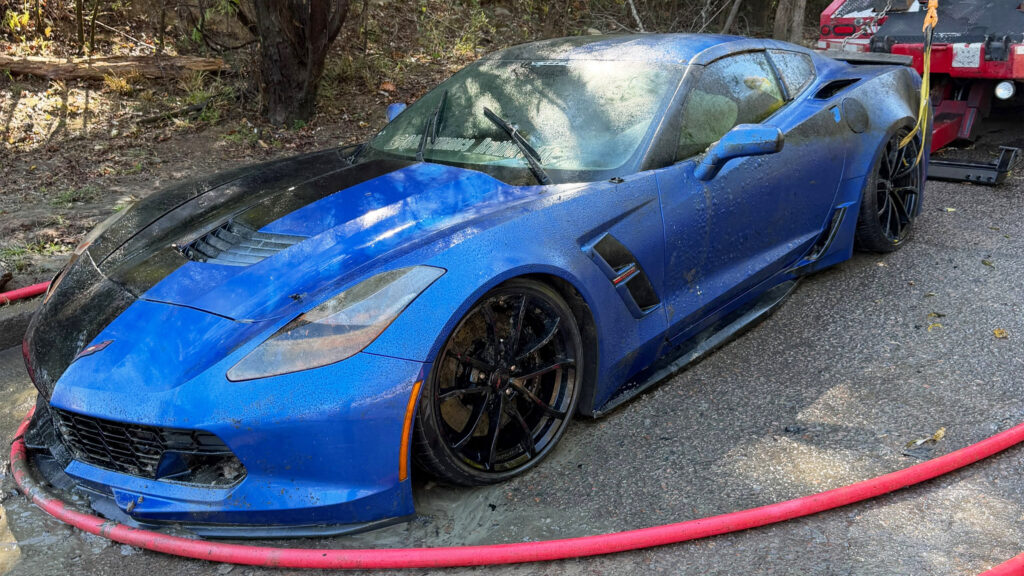
A stolen Chevrolet Corvette C7 that spent years underwater has been recovered, according to a report by Carscoops. The sports car’s bodywork may appear remarkably well preserved, but prolonged water exposure has left it with damage that cannot be economically or safely reversed.
Water immersion can affect far more than the visible cabin and engine bay. Electrical wiring, control modules, connectors, sensors and restraint systems may all be compromised, while corrosion can continue developing inside enclosed components long after a vehicle has been removed from the water.
The case is also a warning for used-car buyers. A polished exterior, fresh interior trim or a low apparent mileage reading should not be treated as proof of a vehicle’s condition. Buyers should examine a vehicle’s history, look for signs of moisture or corrosion, and arrange an independent inspection before completing a purchase.
For drivers in Lithuania, where imported used vehicles remain common, checking a car’s background is particularly worthwhile. Any vehicle with a flood or long-term water-damage history should be assessed with caution, as faults in electrical and safety equipment may emerge only after the sale.